
Curriculum — Internal Medicine Residency at St. Francis Downtown
Facility
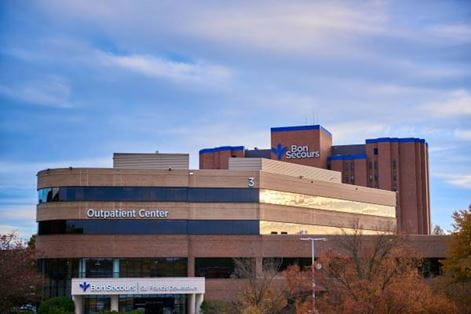 |
Bon Secours St. Francis Downtown Hospital
|
Rotation Schedule
Our curriculum is structured into 13 four-week blocks featuring a balanced split between inpatient and outpatient experiences. Inpatient time focuses on hospital-based responsibilities and acute care.
To support work-life balance and longitudinal learning, the remaining time is dedicated to ambulatory subspecialty rotations, where residents hold a full day of continuity clinic each week to care for their established patient panels.
Subspecialty Rotations
- Hematology/Oncology
- Gastroenterology
- Endocrinology
- Pulmonary Medicine
- Rheumatology
- Infectious Disease
- Nephrology
- Geriatrics
- Palliative Care
- Cardiology
- Neurology
Residents who pursue research elective rotations will devote 100 percent of their time to research activities, with no participation in patient care during that period.
Didactic Curriculum
Structured as follows but subject to change depending upon the needs of the residents and program.
Research and Scholarly Activity
Our program emphasizes quality improvement and scholarly activity, featuring resident-led, faculty-guided projects in both inpatient and ambulatory settings. Residents are required to complete at least one scholarly project before graduation. This requirement is designed to enhance their ability to critically appraise and integrate scientific evidence.
Residents can choose from a broad range of scholarly endeavors to meet this requirement including original research, peer-reviewed publications, case reports, national or regional presentations, and educational curriculum development. Furthermore, residents may lead quality improvement, patient safety, or health equity initiatives aimed at addressing system inefficiencies, empowering them to critically appraise medical evidence, advocate for systemic change, and drive optimal patient care.
Residents are encouraged to collaborate with interprofessional teams on scholarly activities.
Graduation is contingent upon meaningful participation in at least one scholarly project.